Treatment
Dental implants
Replace missing teeth with stable, natural-looking tooth replacements designed around your oral health and smile.
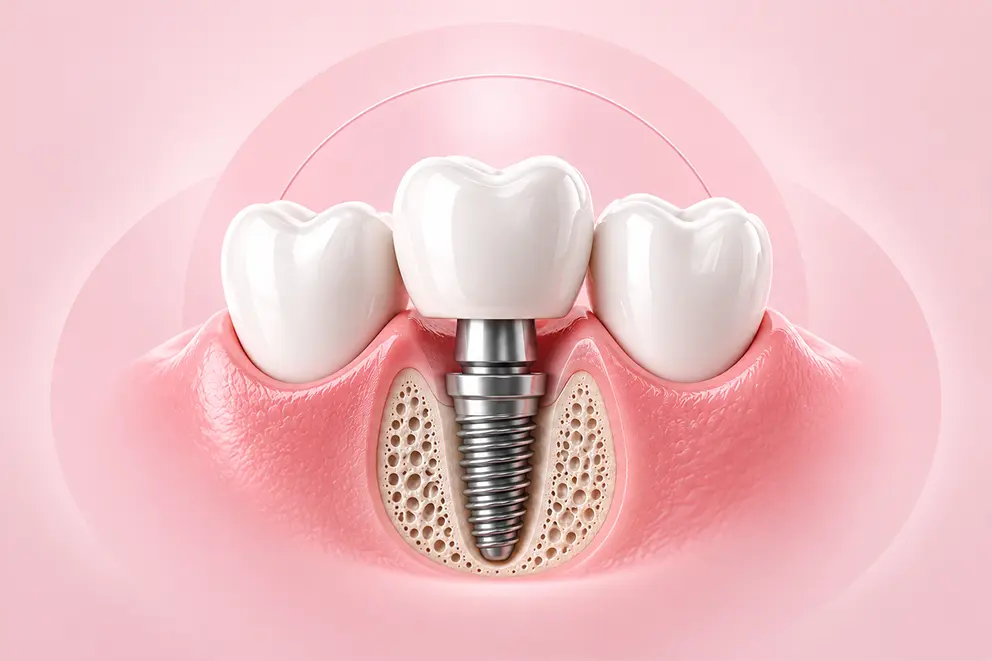
An implant replaces the root of a missing tooth, giving a crown, bridge or denture a secure foundation in the jaw.
Is it right for you
Who implants may help
Implants can be considered for adults who have lost one or more teeth, provided the gums and supporting bone are healthy enough, or can be made ready.
- One missing tooth you would like to replace without reshaping the neighbouring teeth
- Several missing teeth that make chewing or speaking harder
- Loose or uncomfortable dentures that shift while you eat
- A tooth that cannot be saved and needs to be removed
- Gaps that have started to change your bite or the look of your smile
The process
How implant treatment works
Every step is explained before it begins, so you always know what's happening and why.
Consultation and 3D planning
We discuss your concerns and medical history, examine your mouth and use digital X-rays and 3D imaging where needed to assess the bone.
Preparing the foundation
Any infection, gum disease or lack of bone is addressed first. Bone grafting is advised only when your assessment shows it is needed.
Placing the implant
The implant is placed into the jawbone under local anaesthesia, so the area is numb during the procedure.
Healing
Over the following months, the bone gradually bonds with the implant. A temporary tooth may be possible in the meantime, depending on your case.
Your new tooth
Once healing is complete, a custom crown, bridge or denture is made to match your bite and the shade of your natural teeth.
Follow-up care
Regular reviews and professional cleaning help look after the implant and the gum around it.
Your options
Options we may discuss
The right option depends on your oral health and goals. Dr. Nisha will explain which ones suit you, and why.
Weighing it up
Benefits and considerations
Clear, honest information helps you make a decision you feel good about.
What it can offer
- A fixed replacement that does not rely on the neighbouring teeth
- Chewing and speaking that can feel closer to natural teeth
- Can help preserve bone where the tooth was lost
- A crown shaped and shaded to blend with your smile
What to keep in mind
- Treatment usually takes a few months from placement to the final tooth
- Enough healthy bone is needed, and some patients need grafting first
- Smoking and uncontrolled diabetes can affect healing
- Implants need daily care and regular check-ups, like natural teeth
Suitability is confirmed only after a clinical examination, and results vary from person to person.
Good to know
Questions patients ask
Can't find your question here? Ask the clinic team on WhatsApp.
Is getting an implant painful?
The procedure is done under local anaesthesia, so you shouldn't feel pain while it's happening. Some soreness and swelling afterwards is common for a few days, and you'll be advised on how to manage it.
How long does the whole process take?
It depends on your bone, the number of implants and whether any preparatory treatment is needed. For many patients it takes a few months from placement to the final tooth. You will receive a timeline at your consultation.
How long do dental implants last?
With good home care, regular check-ups and a healthy lifestyle, implants can last for many years. How long they last varies with oral hygiene, bite forces, smoking and general health.
Am I too old for implants?
Age alone is rarely the deciding factor. Your general health, gum condition and bone support matter more, and these are assessed before any recommendation is made.
How much do dental implants cost?
The cost depends on how many teeth are being replaced, the type of implant and crown, and whether grafting is needed. You will receive a clear estimate once your assessment and plan are complete.
Talk to Dr. Nisha about dental implants
Understand your options, then decide at your own pace.