Treatment
Invisalign & invisible braces
Explore discreet orthodontic options designed to gradually improve tooth alignment and your smile.
Clear aligners are a series of custom, removable trays that move teeth in small, planned steps, without metal brackets or wires.
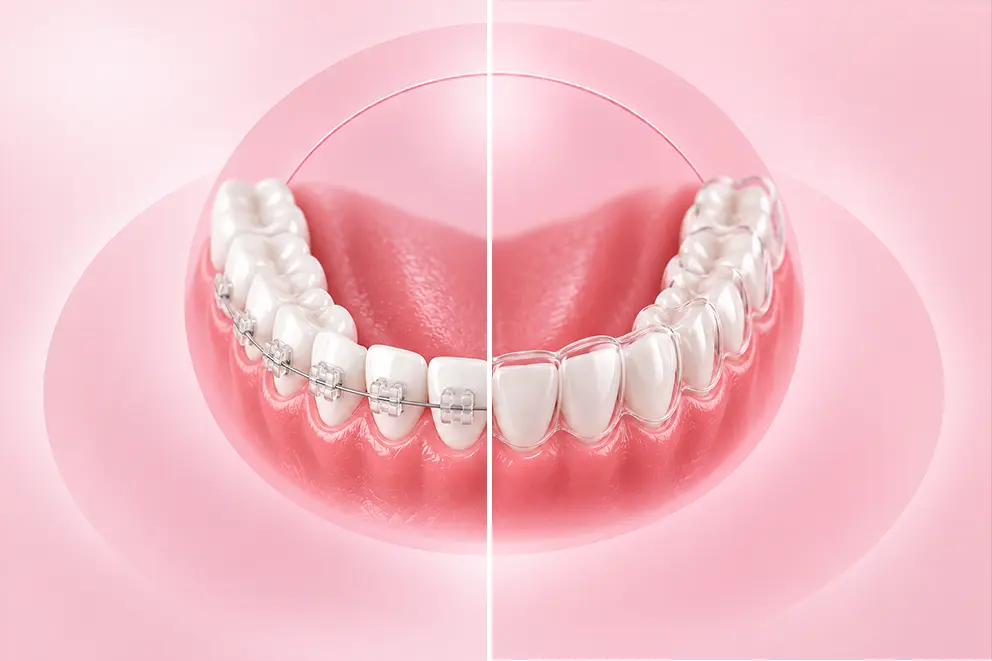
Is it right for you
Who clear aligners may help
Aligners suit many teens and adults with mild to moderate alignment concerns. More complex bite problems may need a different approach, which will be explained if that's the case.
- Crowded or overlapping teeth
- Gaps between teeth
- Teeth that have shifted after braces in the past
- Some overbite, underbite or crossbite concerns
- Adults who prefer a discreet option for work and social life
The process
How aligner treatment works
Every step is explained before it begins, so you always know what's happening and why.
Consultation
We look at your teeth, bite and gum health, and talk through what you would like to change.
Digital scan
A digital scan of your teeth replaces messy impressions and forms the basis of your plan.
Your treatment plan
You see how your teeth are planned to move, how long treatment may take and what is involved, before you decide.
Wearing your aligners
Each set is worn for about 20 to 22 hours a day and changed as advised. Small tooth-coloured attachments may be added to guide movement.
Progress reviews
Periodic visits check that your teeth are tracking to plan. Some cases need refinement aligners towards the end.
Retainers
Once treatment is complete, retainers help hold your teeth in their new position.
Your options
Options we may discuss
The right option depends on your oral health and goals. Dr. Nisha will explain which ones suit you, and why.
Weighing it up
Benefits and considerations
Clear, honest information helps you make a decision you feel good about.
What it can offer
- Clear trays that are discreet enough to wear to work
- Removable for meals, brushing and flossing
- No brackets or wires rubbing against the cheeks
- A digital preview of the planned tooth movement
What to keep in mind
- Results depend on wearing aligners for the advised hours every day
- Each new set can feel tight for a day or two
- Aligners come out to eat and to drink anything except water
- Retainers are needed afterwards to reduce the chance of relapse
Suitability is confirmed only after a clinical examination, and results vary from person to person.
Good to know
Questions patients ask
Can't find your question here? Ask the clinic team on WhatsApp.
How long does aligner treatment take?
It varies with how much movement is needed. Some mild cases finish in a few months, while others take a year or longer. Your plan will include an estimated timeline.
Do aligners hurt?
Most people feel pressure or tightness for a day or two after switching to a new set. This usually settles as the teeth adjust.
Will people notice I am wearing them?
Aligners are clear and fit closely over your teeth, so they are discreet. Any attachments are tooth-coloured.
Can I eat normally?
Yes. You take the aligners out to eat, then brush or rinse before putting them back in.
Do I need a retainer afterwards?
Yes. Teeth can drift back over time, so retainers are an important part of keeping your result.
Talk to Dr. Nisha about invisalign and invisible braces
Understand your options, then decide at your own pace.
Invisalign is a registered trademark of Align Technology, Inc.